Spinal Trauma & Fracture Stabilisation
Prompt, accurate management of spinal fractures and spinal cord injuries — stabilisation, decompression and rehabilitation to protect the nerves and restore alignment.
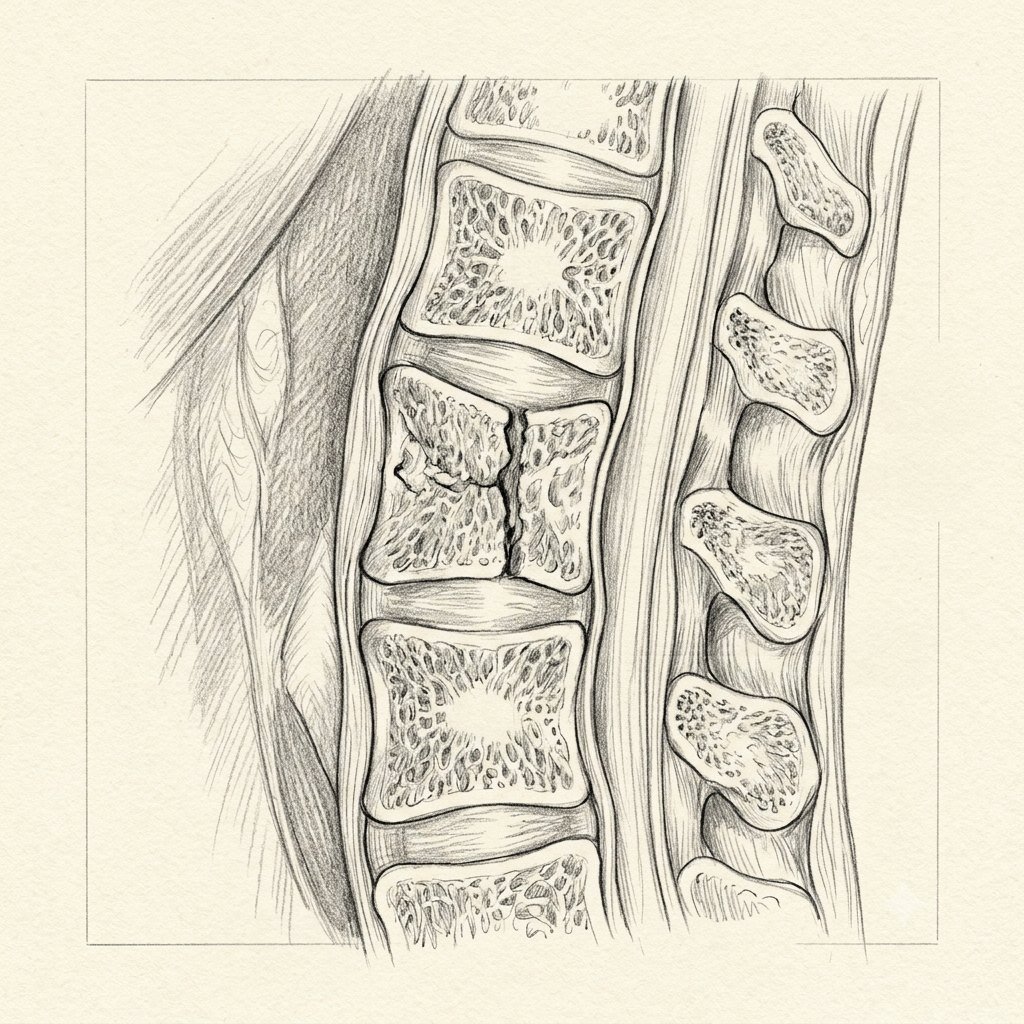
Why timing matters
Prompt, accurate care of a spinal fracture or cord injury is crucial for recovery. The goals are always the same: protect the spinal cord and nerves, restore alignment and stability, and get you moving safely as soon as possible.
Common causes
- Road traffic accidents and high-energy injuries
- Falls, especially in older adults
- Osteoporosis-related fractures from minor trauma
- Sports and workplace injuries
Assessment
Treatment
Non-surgical
- Bracing and monitored recovery for stable fractures
- Pain management and early guided mobilisation
Surgical stabilisation
- Decompression to relieve pressure on the cord or nerves
- Fixation and stabilisation to restore alignment
- Techniques chosen to protect the cord and nerves and support healing
Treatment goals
- Early neurological recovery
- Restoration of spinal alignment
- Pain control and a return to mobility
Frequently asked questions
No. Many stable fractures heal well with bracing and monitoring. Surgery is reserved for unstable fractures or those affecting the nerves.
These are fractures that occur with little or no trauma because the bone is weakened. They are common in older adults and often treatable with targeted procedures to stabilise the fractured bone.
Modern stabilisation aims to get patients up and walking quickly — often within a day or two — followed by a guided rehabilitation plan.
Recent spinal injury or fracture?
Seek prompt expert assessment. For emergencies, go to the nearest hospital; for follow-up spine care, contact the clinic.