Spinal Fractures
Spinal fractures — from accidents, falls or osteoporosis — need prompt, accurate care to protect the nerves and restore stability.
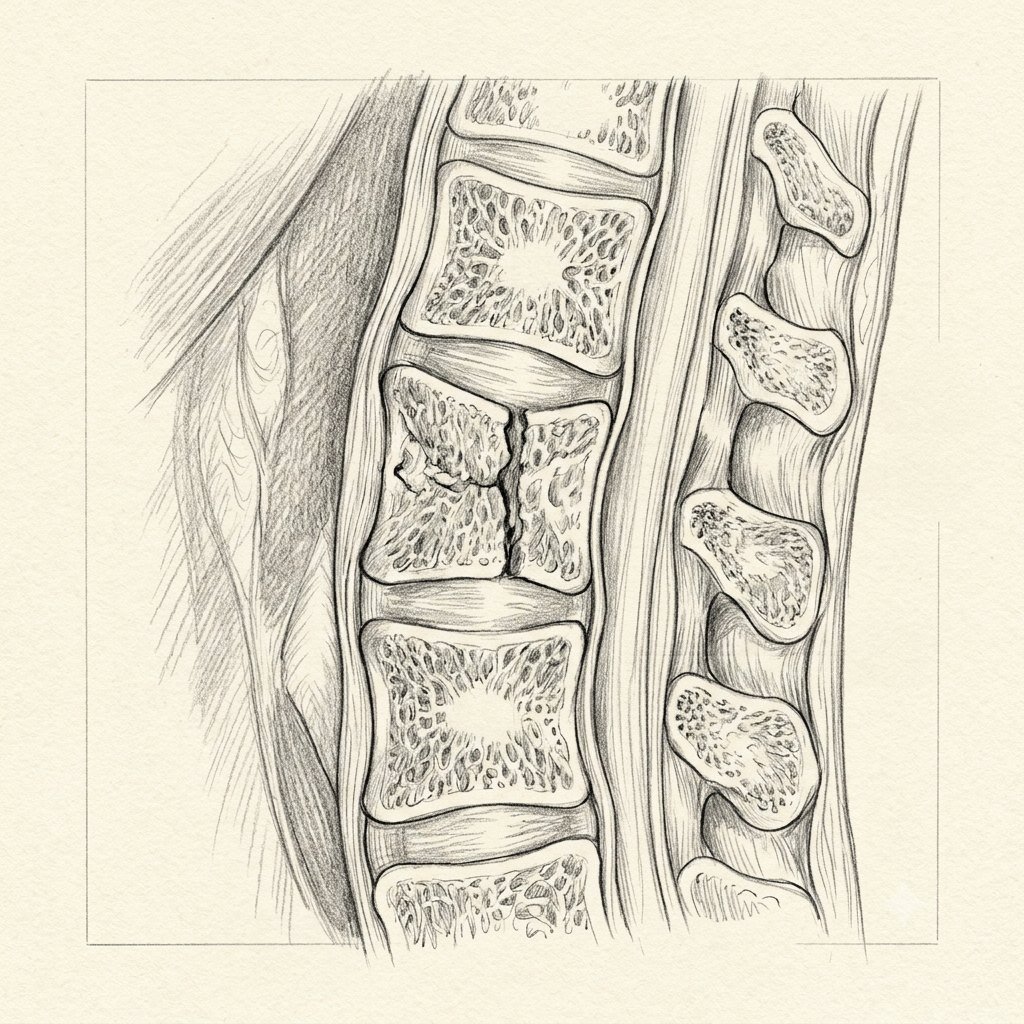
About spinal fractures
A spinal fracture can range from a stable compression fracture to an unstable injury threatening the spinal cord. Prompt assessment determines the fracture pattern, its stability and whether the nerves are at risk — which guides the whole treatment plan.
Common causes
- Road accidents and high-energy trauma
- Falls, particularly in older adults
- Osteoporosis, where fractures occur with minimal force
Treatment
Stable fractures often heal with bracing, pain control and monitored recovery. Unstable fractures, or those compressing the nerves, need surgical stabilisation and decompression to restore alignment and support recovery.
Frequently asked questions
Many are stable and heal with supportive care, but they should be assessed — especially osteoporotic fractures, which can be treated with targeted procedures.
Modern stabilisation aims to get patients moving quickly, followed by a structured rehabilitation programme.
After a fall or spinal injury?
For emergencies, go to the nearest hospital. For expert spine fracture care and follow-up, contact the clinic.