Spondylolisthesis
Spondylolisthesis is the forward slip of one vertebra over another — graded carefully and treated from physiotherapy to surgical stabilisation.
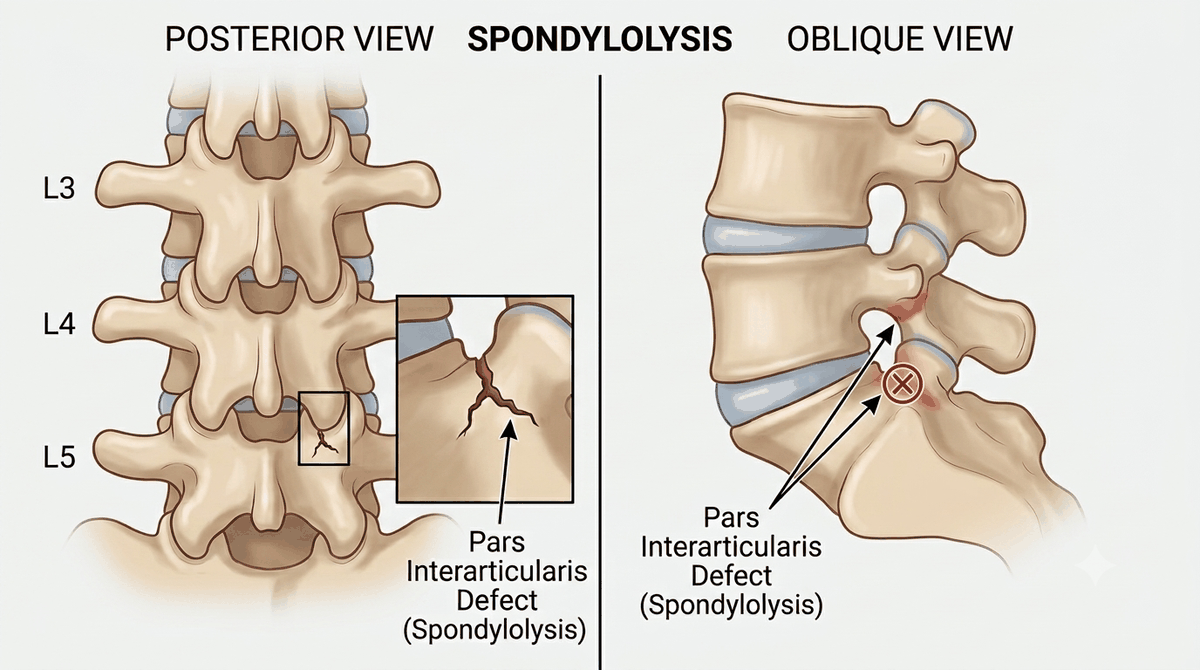
What is spondylolisthesis?
Spondylolisthesis occurs when one vertebra slips forward over the one below, most often in the lower lumbar spine. It may follow a stress fracture (spondylolysis) in younger people or degeneration in older adults, and is graded I–IV by severity.
Symptoms
- Lower back pain, often worse with activity
- Buttock and thigh pain, tight hamstrings
- Leg numbness or weakness if a nerve is compressed
- A palpable step in higher-grade slips
Treatment
Stable, low-grade slips are managed with core-focused physiotherapy, activity modification and pain relief. Slips that progress or compress nerves are treated with decompression and stabilisation surgery to hold the vertebra securely and relieve symptoms.
Read more about the full service on the Spondylolysis & Spondylolisthesis Care page.
Frequently asked questions
Most low-grade slips are stable and managed without surgery. Progression or nerve compression is what prompts more active treatment.
Yes — a targeted, core-stability programme is a cornerstone of treatment. The physiotherapy team will guide safe activity.
Diagnosed with a spinal slip?
Get expert grading and a personalised plan from a fellowship-trained spine surgeon.