Spinal Stenosis
Spinal stenosis is a narrowing of the spinal canal that presses on the nerves — causing pain, numbness and heaviness, often relieved with decompression surgery.
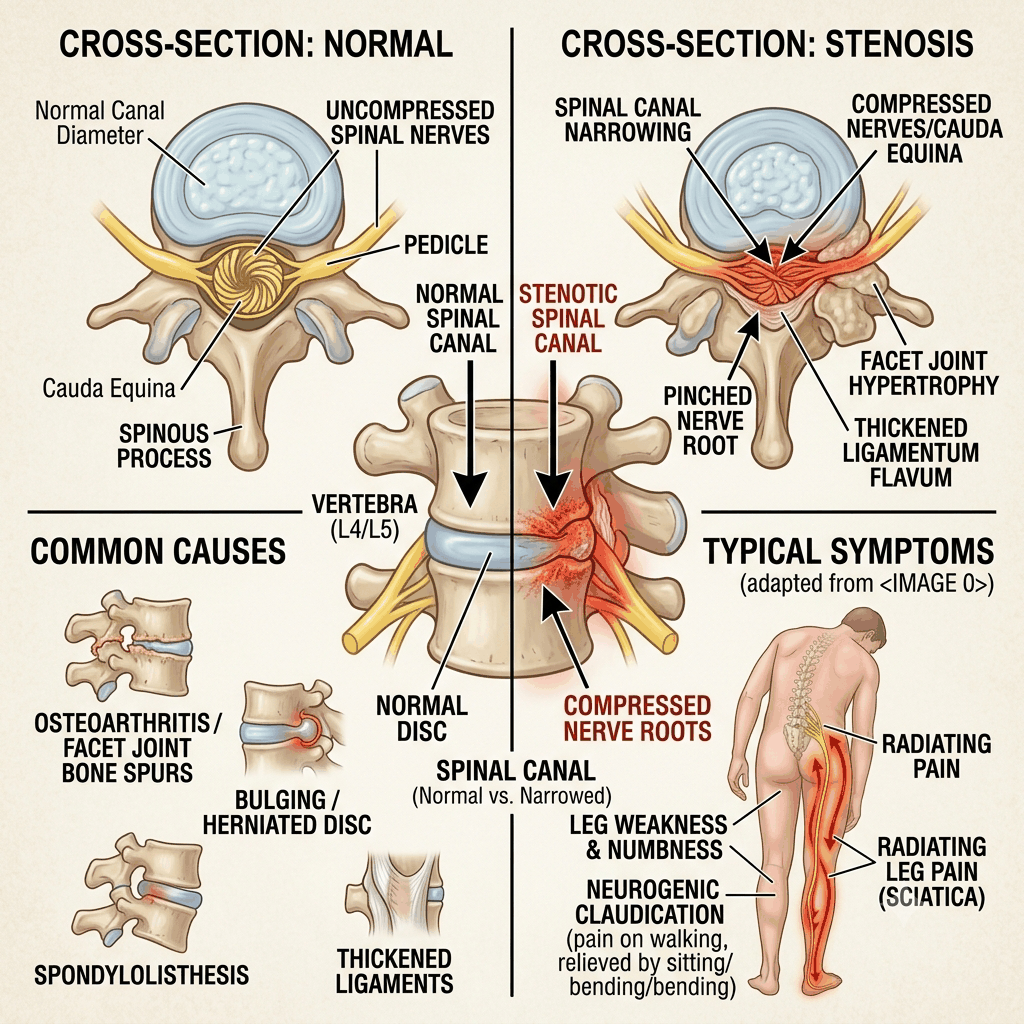
What is spinal stenosis?
Over time, the spinal canal can narrow as discs, joints and ligaments thicken with age. This narrowing (stenosis) crowds the nerves, most commonly in the lower back and neck, and tends to develop gradually.
Symptoms
- Leg pain, heaviness or cramping when walking, eased by sitting or leaning forward
- Numbness or tingling in the legs
- Back pain and reduced walking distance
- Neck stenosis can cause arm symptoms and balance changes
Treatment
Early stenosis is managed with physiotherapy, activity strategies and targeted injections. When walking distance and quality of life are significantly affected, decompression surgery relieves the pressure on the nerves, easing leg symptoms and improving walking distance.
Frequently asked questions
Not necessarily. Many people manage well for years with conservative care. Treatment is guided by symptoms and how much they limit you.
Decompression is a well-established procedure that relieves pressure on the nerves; it is planned carefully to protect the surrounding tissues and support a steady return to walking.
Legs tiring quickly when you walk?
It may be spinal stenosis. An expert assessment can restore your comfort and mobility.