Being told you have a herniated or “slipped” disc can sound alarming — and many people assume it means surgery. In reality, the large majority of disc herniations settle without an operation. Here is how to know where you stand.
What is a herniated disc?
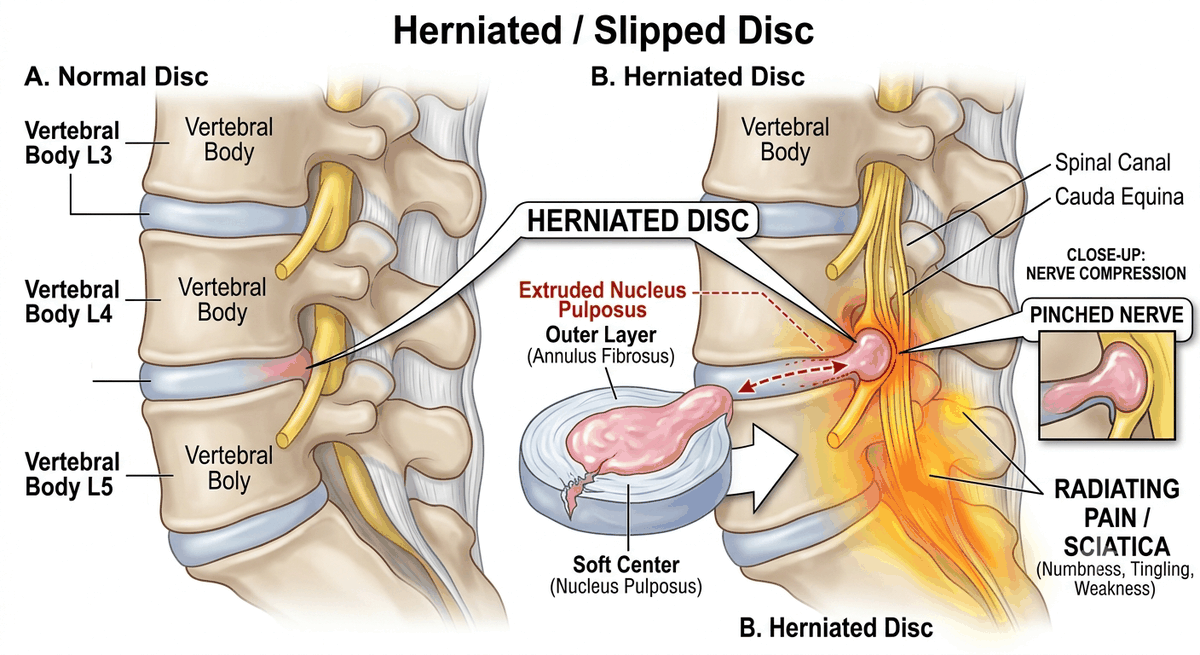
The discs between your vertebrae act as cushions. When the soft centre of a disc pushes through its tougher outer layer, it can press on a nearby nerve, causing back pain, leg pain, tingling or numbness. It is extremely common and often happens without any dramatic injury.
Most herniated discs heal on their own
Most herniated discs improve over weeks to a few months as the body naturally reabsorbs the displaced disc material and the inflammation settles. First-line treatment is almost always non-surgical: staying active, physiotherapy, activity modification and, where helpful, a targeted injection.
When is surgery actually needed?
Surgery is considered in a minority of cases, usually when:
- Leg pain is severe and persistent despite several weeks of proper non-surgical care
- There is significant or worsening muscle weakness
- Nerve compression is causing numbness around the groin, or loss of bladder or bowel control (a medical emergency)
- Symptoms seriously limit your work and daily life
What does the surgery involve?
The most common procedure removes the fragment of disc that is pressing on the nerve, relieving the leg pain. It is a well-established operation, and most patients notice rapid relief of their nerve pain afterwards, followed by a guided return to normal activity.
The bottom line
A herniated disc is rarely a reason to rush into surgery. The right first step is an accurate diagnosis and a clear, honest explanation of your options — with surgery recommended only when it genuinely offers the best outcome.
Worried about a slipped disc? Dr. S. Sivaraj will assess your scans, explain your options plainly, and recommend surgery only when it is truly needed. Call or WhatsApp +91 98940 98701 to book.
This article is general information and not a substitute for personalised medical advice.
Leave a Reply